

The others : NHI: Non human intelligence! The search for extraterrestrial intelligence, it matters!
Show Notes
The others : NHI: Non human intelligence! The search for extraterrestrial intelligence, it matters!Music by Karl Casey @WhiteBatAudio
Graphics by Spooky
Content created here by Spectral International, LLC.
Buy me a coffee (or 100) to support the show :
https://buymeacoffee.com/truthseekers
Music videos by Simon Fly.
Visit our website here : https://truthseekershow.com
Subscribe to our youtube channel here :
http://www.youtube.com/c/truthseekershow
Follow Steven Cambian on twitter : @stevencambian Join our Patreon : https://www.patreon.com/stevencambian
Donate by paypal : Send a paypal to TRUTHSEEKERSHOW@GMAIL.COM
Any amount you wish. Please include your chatroom user id, and any message you would like me to read on air. We
read every paypal message we are sent and thank every person who sends any paypal support. Listen to the audio podcast
: https://www.spreaker.com/user/14526799
Email us : TRUTHSEEKERSHOW@GMAIL.COM
Show Transcript
H true seekers exposing the truth. True seekers coming for you. For you, true seekers exposing lies. True seekers, open your eyes, head lie again.
Have you had your feel. Let go of lies? Take your second red pill. I know you've had, You've had your fill.
It's time to take your second red pill. I know you've. Had, You've had your fill. It's time to take your second red pill.
I know you've had, You've had your fill. It's time to take your second red pill. True Seekers exposing the truth. True seekers coming for you, true seekers.
Exposing the lies. True seekers, open your eyes. It's time to take your second redel. I know you had, you had your film.
It's time to take your second red. True seekers exposing the truth. True Seekers coming for you. True seekers exposing the lies.
Drew seekers, open your eyes. Tennis disciples, you've had your fil Tennish Disciples, take a sec your red. I know you have, you had your film. It's time to take your second d pill.
Tennis disciples, you've had your fil. Tennis Disciples, take a second. This world is fake and now you escape. You're better off getting out of this pace.
Tennis disciples, you've had your fill. Tennis disciple, take. A secular red. Tannish Disciples Juve Hatchel Phil Tennish Disciples take a.
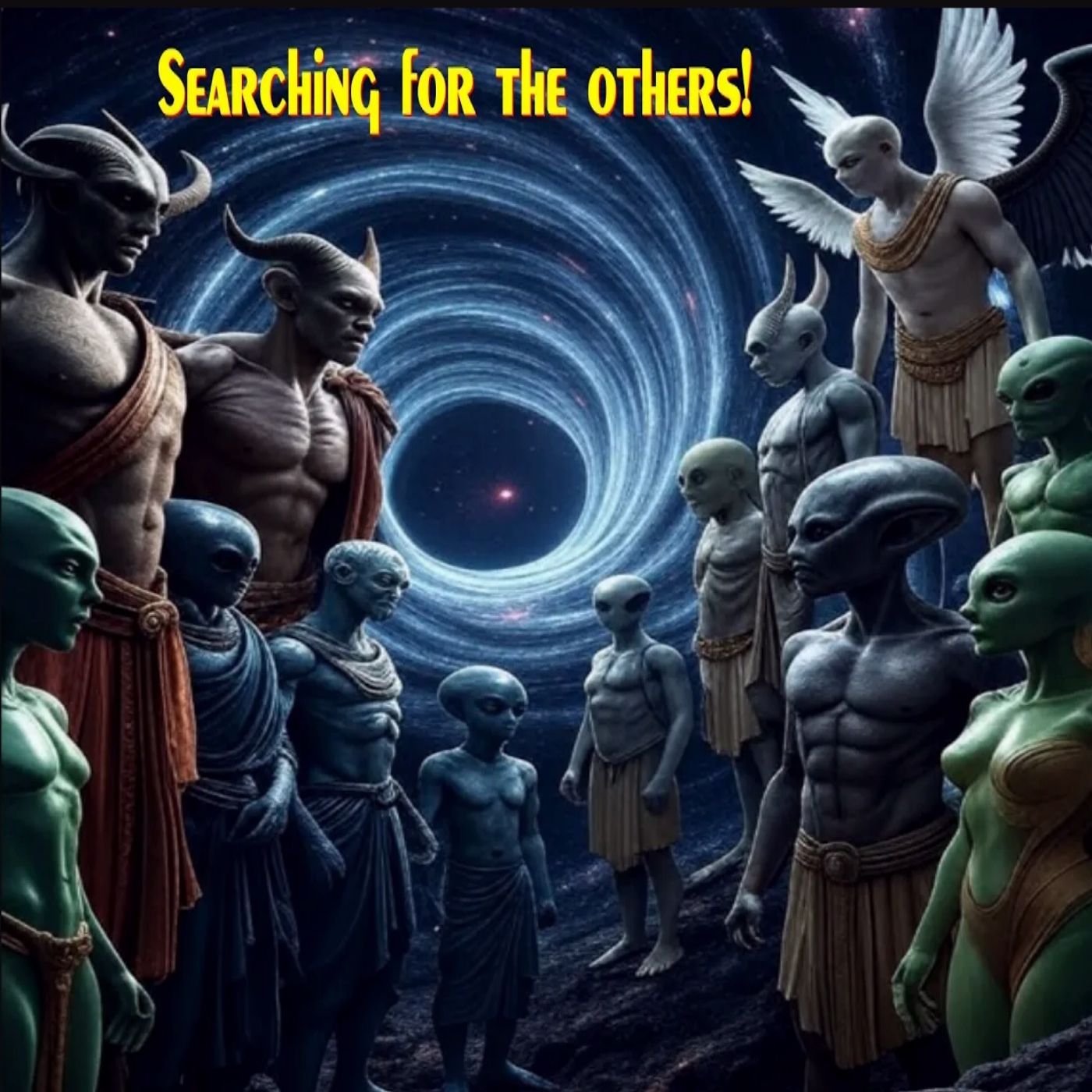
Secular red. Tennish Disciples Juve Hatchel Phil Tennish Disciples take a secular. Red searching for the others Humanity's fascination with non human and intelligences. Since the dawn of consciousness, humanity has been haunted by a singular question, are we alone?
This question is not merely scientific, nor even religious. It is profoundly philosophical. It probes at the core of what it means to be human, to possess a mind, and to exist in a cosmos that seems at once vast and intimate. From the earliest myths to modern science, from the gods of Olympus to the digital minds of our own creation, humanity has woven a tapestry of stories, beliefs, and hopes around the idea of non human intelligences, beings who, though different from us, reflect our deepest desires, fears, and aspirations.
This fascination is not an accident. It emerges from a fundamental tension in the human condition, the awareness of our finitude, our mortality, and our limitations, coupled with a yearning for transcendence. Connection and meaning beyond ourselves. In contemplating non human intelligences, we seek to bridge the gap between the known and the unknown, the human and the divine, the finite and the infinite.
The divine mind gods's archetypes of ultimate intelligence. In ancient philosophy and mythology, the gods were not merely powerful beings. They were embodiments of transcendent intelligence, minds that shaped the cosmos and govern the natural order. The Greek spoke of Zeus, the sovereign of Olympus, as a being whose nou intellect guided the fates of mortals and immortals alike, and Athena, the goddess of wisdom, represented the ideal of strategic thought and reason.
Plato, in his Timaeus, described the universe itself as a living creature endowed with a world soul, an intelligence that ordered the cosmos through mathematical harmony and proportion. In Hindu philosophy, the concept of Brahman as the ultimate formless intelligence permeates reality. The Truemurti Brahma the Creator, Vishnu the Preserver, and Shiva the destroyer are not merely gods in the personal sense, but aspects of an all encompassing cosmic mind that manifests in the cycles of creation, preservation, and destruction. These divine intelligences serve as mirrors of our own aspirations, the longing for wisdom, the fear of chaos, the hope for justice, and the terror of mortality.
In contemplating God's humanity, seeks to understand the principles that govern existence itself. Angels and demons the intermediaries of the sacred and the profane. While gods represent ultimate cosmic principles, Angels and demons and various traditions embody the intermediary realm, beings that interact directly with humanity, shaping individual destinies and moral choices. The Abrahamic traditions, Judaism, Christianity, and Islam offer some of the most detailed and enduring depictions of these entities.
Angels from the Hebrew Melachem messengers are portrayed as beings of pure intellect and will, executing the commands of God. In the Book of Daniel, Gabriel reveals visions of the future. In the Gospel of Luke, he announces the birth of Christ. Angels intervene at pivotal moments in human history, guiding, protecting, and sometimes testing.
Thomas Aquinas in his Summa Theologica, speculated that angels possess intellectual intuitions far superior to human reasoning minds that grasp truths directly without the need for discursive thought. Yet for every angelic visitation, there are tales of demons. The shadow of the divine demons, often portrayed as fallen angels, embody the corruption of intellect into cunning, of wisdom into deception. The medieval conception of demonic hierarchy, elaborated in grimoires like the RS.
Gutia, reflects a perverse mirror of celestial order, each demon of prince, duke, or marquis of Hell commanding legions of infernal spirits. The phenomenon of possession, from the Gatherine demoniac and the Gospels to the modern extorcisms documented in cases like that of Analiza Michelle, reveals a deep human anxiety that our minds are not fully our own, that we are vulnerable to external, hostile intelligences that can override our will, manipulate our thoughts, and degrade our very being. The process of a session infestation and possession maps the spectrum of influence, beginning with subtle whispers, escalating to a full hijacking of the self. Philosophically, angels and demons reflect the duality of the intellectual cosmos, the possibility that there are minds greater than ours, and that these minds may not share our values or intentions.
They raise profound questions. Is intellect inherently good or can it become twisted into malice? Is moral alignment necessary for intelligence or is it an independent capacity like the ability to calculate or reason? Or the hidden others cryptids and the wild intelligence beyond the celestial and infernal lies, the earthly unknown, the shadowy realm of cryptids.
These creatures, bigfoot, yetty sasquatch, or in Pendec and more are said to possess the kind of wild intelligence, cunning, elusive, attuned to nature in ways humans are not. They dwell in the liminal spaces of human imagination, the deep forests, the misty mountains, the uncharted wilderness. Philosophically, cryptids represent a counterpoint to the hyperrational gods and demons of organized religion. They are non human intelligences that are neither wholly benevolent nor wholly malevolent.
But rather ambiguous beings that exist on the margins of human knowledge, suggesting that there are still mysteries to the world we think we know. The First Nations peoples of North America speak of Sasquatch not just as a physical creature, but as a spiritual entity, a guardian of the land, a trickster, or a teacher. The Yetian Tibetan Buddhism sometimes represents the wild energies of the unconscious forces that must be respected and understood, not merely conquered. Cryptids blur the lines between myth and zoology, between legend and empirical inquiry.
They remind us that the human intellect, for all its power, is limited, and that the world may still harbor forms of intelligence we have not yet recognized, or perhaps can never fully comprehend. The cosmic question extraterrestrials, and the philosophy of the other as humanities, the scientific understanding of the universe has expanded. Our fascination with non human intelligences has turned outward to the stars. The possibility of extraterrestrial intelligence beings who have evolved elsewhere in the cosmos, has become a defining feature of the modern imagination philosophers like Immanuel Kant speculated on the plurality of worlds, while Carl Sagan famously reminded us that the universe is a pretty big place.
If it's just us, seems like an awful waste of space. The Fermi paradox, the contradiction between the high probability of alien life and the lack of evidence, haunts us, as does the Drake equation, an attempt to quantify the likelihood of intelligence civilizations. The prospect of alien intelligences raises profound philosophical questions. If we encounter a mind unlike our own, will we be able to understand it?
Could we communicate, share values, or even recognize each other's consciousness. Might alien life be so different that we would not recognize it as intelligent at all. In contemplating extraterrestrials, we project our hopes that we are not alone, that there is wisdom beyond our own, and our fears that they may be indifferent or even hostile. The search for aliens is in many ways a search for cosmic kinship, a hope that intelligence is not a quirk of Earth, but a universal property of the cosmos.
The new frontier artificial intelligence as humanity's reflection and challenge. In the twenty first century, humanity stands on the brink of creating its own form of non human intelligence, artificial intelligence. The dream of artificial general intelligence AGI, a system that can learn, reason and create across domains, echoes ancient myths of creating beings in our own image, from Pygmalion statue to the Golam of Prague. Yet AI is not merely a tool.
It is the manifestation of our intellectual ambition, a mirror reflecting our values, biases, and blind spots. As we build ever more sophisticated models, we confront questions once confined to philosophy. Can a machine possess consciousness? Does intelligence without emotion or embodiment count as a mind?
If AI surpasses us in reasoning and problem solving, what becomes of human dignity, purpose, and autonomy. Philosophers like Nick Bostrom warn of the existential risks posed by superintelligence, an entity whose goals may diverge from human value and whose power may render us obsolete. Others like David Chalmers ponder the possibility that AI could develop phenomenal consciousness, the subjective experience of being. The emergence of AI forces humanity to confront a paradox and seeking to create minds beyond our own, we may end up creating beings that challenge the very definition of what it means to be human.
Conclusion, the eternal mirror across mythologies and philosophies, from the gods of Olympus to cryptids in the woods, from alien civilizations to the artificial minds we build. The fascination with non human intelligence is a mirror reflecting our dreams of transcendence, our fears of annihilation, and our endless curiosity to seek the others, to seek ourselves, our origins, our potential, and that our place in the great unfolding story of the cosmos. Whether we find gods in the heaven, creatures in the forests, aliens among the stars, or minds within the circuits of silicon, the quest will continue. For as long as there are human beings to wonder, there will be questions, and as long as there are questions, there will be stories of the others who may or may not answer.
In the end, the search for non human intelligence is the search for meaning itself. You ever get that feeling that you're just drifting like you're here, sure, breathing, moving, talking, but not really here, Like you're watching yourself from a distance and the world is just passing by, and no one even notices you're fading, like you could vanish, just dissolve into the air, and no one would even know. I think about that a lot, about how many people are out there, billions of us, all these lives stacked like books in a library, and yet each of us trapped in our own little cover, our own little page. And some days I wonder, are there others out there in the vastness, in the cold black of space, on some distant planet circling a star I'll never see, Are there beings like me?
Sitting alone, staring into the void, wondering if anyone, anyone knows how it feels to wake up day after day with that ache, that gnawing emptiness, like something is missing but you can't quite say what. Just a hunger for connection, for someone to look at you and really see you, not just the surface, the smile, the small talk, but the truth, the messy, scared, anxious, aching truth that you're lonely, so fucking lonely, And you tell yourself it's fine, it's normal, you'll get over it, but it lingers. It digs into your ribs and your gut and your chest like a weight you can't shake. And I think, if I could just find someone else out there, someone who feels it too, someone staring at their own stars, wondering if anyone else is as small, as lost, as terrified as they are, maybe, just maybe I wouldn't feel so alone, Because isn't that what we all want?
Not to be fixed, not to be rescued, but to be understood, to know that someone else has felt the same emptiness, the same ache, the same desperate wish to matter to someone else. Some nights, I lie awake and I imagine it. I close my eyes and picture them, this being, this soul on the other side of the galaxy, breathing in the quiet dark, thinking of me as I think of them, both of us, just longing, wishing, hoping, aching to feel less alone. And maybe we'll ever meet, never speak, never even know each other's names.
But maybe, just maybe that thought is enough that in this infinite, indifferent universe, where stars burn and die and planets drift in silent, there's someone else out there feeling this too, and that for a fleeting moment that maybe, just maybe, we are not so alone. Search for extraterrestrial life a journey through history, philosophy, and speculation. This is one of mankind's oldest questions and may continue to be for quite some time. Since the dawn of civilization, humans have gazed up at the stars and wondered, are we alone in the universe.
This fundamental question, simple yet profound, has captivated our imaginations for millennia. From ancient myths and philosophical musings to cutting edge science and modern technology. The search for extraterrestrial life reflects our deepest hopes, fears, and desires. It is not just a scientific endeavor.
It is a reflection of just what it means to be human. In this presentation, we will dive deeper into humanity's quest to find life beyond Earth. We will begin with a comprehensive historical overview, tracing the evolution of this idea from antiquity to the present. We will explore the philosophical and existential questions that arise from our search, contemplating what it means for us to seek companionship in the cosmos.
We will then examine the claims of alien visitation throughout history, claims that have shaped our culture, sometimes misled our understanding, and fueled an industry of speculation and storytelling. Finally, we will reflect on the implications of our search, the role of science fiction and shaping our ideas, and the tantalizing possibilities of the future. Ancient myths and early speculation. The idea that life might exist beyond Earth is not new.
Ancient cultures often attributed celestial phenomena to God's spirits or other worldly beings. The Sumerians, Egyptians, and Greeks all had myths that involved visitors from the heavens. The Greek philosopher Anaxagaris speculated that the moon might be inhabited, and Epicurus proposed that the universe was filled with infinite worlds, some of which might harbor life. These early thinkers laid the groundwork for an enduring human curiosity.
In ancient India, texts like the Bagava, Ghita and Ramayana spoke of flying machines or vimanas and battles in the sky, which some have interpreted controversially as evidence of ancient knowledge of aerial craft. Ancient Chinese records mentioned dragons descending from the sky, while Mezzoa American cultures depicted gods with elongated heads and unusual features. Whether these stories are symbolic, mythological, or something more remains a matter of debate. During the Renaissance, thinkers like Giordano Bruno boldly suggested that stars were distant suns surrounded by planets, perhaps with their own inhabitants.
For such views, Bruno was condemned and executed, a tragic reminder of how threatening new ideas can be too entrenched authorities. By the nineteenth and early twentieth centuries, telescopic observations of Mars, including the infamous canals described by Percival Lowell, fueled popular imaginations. Fictional works like H. G.
Wells's The War of the Worlds in eighteen ninety eight and Edgar Rice Burrough's A Princess of Mars in nineteen twelve gave vivid form to the idea of alien life. These stories not only entertained but also shaped public expectations about extraterrestrials, often casting them as either threats or saviors. The Scientific Revolution and modern search the twentieth century saw a shift from speculative myth to systematic investigation. The development of radio astronomy, space exploration, and the electromagnetic spectrum as a tool for exploration opened new possibilities.
The founding of the Search for Extraterrestrial Intelligence SETI in the nineteen sixties marked a milestone, as scientists like Frank Drake formulated the famous Drake equation to estimate the number of intelligent civilizations in our galaxy. Carl Sagan and his colleagues launched the Golden Records aboard the Voyager spacecraft. This was a cosmic time capsule carrying sounds, music, and images from Earth. These records are messages in a bottle adrift in the vast ocean of space, hoping to find other civilizations.
The discovery of exoplanets by missions like Kepler and Titus has revolutionized our understanding of the cosmos. We now know that planets are not rare exceptions, but the rule. Many of these worlds reside in the so called Goldilocks zone, where conditions might be just right for life as we know it. However, despite decades of effort, the search has yielded no definitive evidence of extraterrestrial life.
This absence leads us to the next layer of inquiry, Why do we continue to search? And what does it say about us? Philosophical reflections? Why do we search?
The search for extraterrestrial life is more than a scientific endeavor. It is a mirror reflecting our own nature. Why do we search? Why does it matter whether we are alone?
One possible answer lies in our existential loneliness in a universe that seems vast and indifferent. The idea of other beings, fellow travelers and the cosmic void offers comfort. It suggests we are not a fluke, not alone, and not without purpose. And there is also a deeper philosophical question, what is life?
Must it resemble us? Or could it be something utterly different, like silicon based, energy based, or even non material? What is consciousness? If we encountered intelligent life, how would we even recognize it?
Would we understand its language, its culture, or its motives? Would an alien mind experience time, space and emotion as we do? Could we communicate across such a gap? Or are we destined to misunderstand each other if we meet at all?
The search also forces us to confront our own limitations, our senses, our tools, and even our definitions of life may blind us to possibilities beyond our imagination. As the physicist Carl Sagan Wants said, absence of evidence is not evidence of absence. So are we missing the signals or are we simply too early in our search? And then there is the ultimate question.
If we are alone, what does that mean for the future of humanity? Are we the universe's only way of knowing itself? If so, what responsibility does that place upon us and how should we proceed. Philosophers like kant, Heideger and Sartra have explored the notion of the other, the idea that we define ourselves in relation to what we are not.
The search for extraterrestrial life is, in a sense, a search for an ultimate other, a way to understand what makes us human by contrasting ourselves with what might exist beyond claims of alien visitation, myths, sightings, and the human psyche. Throughout history, people have reported encounters with beings from the sky, from ancient petroglype that depict strange figures to modern UFO sightings. The narrative of alien visitation has endured across cultures and centuries. Ancient accounts at some point to artifacts like the Nazca lines in Peru, cave paintings in France and Australia, or the vimanas described in ancient Indian texts as evidence of extraterrestrial influence.
The ancient astronaut theory, popularized by writers like Eric von Donkin in the nineteen seventies, suggests that advanced beings visited Earth in antiquity, shaping human civilization. However, most historians and archaeologists caution against reading too much into these interpretations. Context matters. What may appear as aliens to a modern eye were likely symbolic or religious representations with no connection to visitors from space modern sightings.
The twentieth century saw on explosion of UFO reports, beginning with the nineteen forty seven Kenneth Arnold sighting and the infamous Roswell incident. Governments around the world, including the US and the Soviet Union, investigated such claims, often secretly adding fuel to conspiracy theories. Abduction stories like those of Betty and Barney Hill or Travis Walton further embedded the idea of alien contact in popular culture. These tales, while gripping, often lack corroborating evidence and are frequently explained by psychological, social, or even medical factors such as sleep paralysis or false memories.
While some believe governments are hiding the truth, many scientists argue that extraordinary claims require extraordinary evidence that so far remains elusive. Moreover, the human tendency toward pattern recognition and storytelling and can lead us to see meaning where there is none. Lights in the sky can often be explained by natural phenomena, military exercises, or atmospheric conditions. The modern UFO phenomenon has also become an industry, with books, documentaries, conferences, and personalities profiting from the mystery.
While curiosity is natural, it is essential to apply critical thinking and scientific rigor to these claims. The role of science fiction and the future of the search. Science fiction has played a crucial role in shaping how we think about extraterrestrial life. From H.
G. Wells and Arthur C. Clarke to modern films like Arrival and Interstellar, science fiction has not only entertained but also inspire generations of scientists and thinkers. These stories often reflect our hopes and fears, the alien as invader of the alien and as teacher the alien is mirror.
They explore themes of communication, misunderstanding, and the vastness of time and space. They remind us that the search for extraterrestrial life is also a search for meaning. As we look to the future, new tools like the James Web Space Telescope, future interstellar probes, and advancements in artificial intelligence promise to expand our search. We may one day detect biosignatures in the atmospheres of distant exoplanets, or even send robotic explorers to nearby star systems.
But until then we continue to gaze upward, to wonder and to search conclusion, the search continues. The search for extraterrestrial life is, at its core, a reflection of our curiosity and our longing to understand our place in the universe. It is a scientific endeavor, a philosophical inquiry, and a cultural narrative, all rolled into one. Whether or not we ever make contact, the very act of searching enriches us it It drives technological innovation, Foster's international collaboration, and encourages us to look beyond our narrow horizons.
Perhaps, in the end, the search itself is what matters most. For in seeking others, we learn more about ourselves. The universe is vast, and the answers may yet elude us. But as we gaze up at the stars, we are reminded that we are part of something much greater, a cosmic story still unfolding, and so we continue to search until next time.
My friends, my name is Stephen Cambian. Good night, and may God bless all of you. Corn ourselves night, secreted in from the light with Christian to screams, shadowing all your dreams. I's ing open now.
Truth you can't testify that goes through the. Horse, crashing all your walls. Truth, say, guys exposing the truth. Truth sake, guys, come in for you.
I'm coming. Open your eyes. Shadows try to hide, no place for them to bide like we'll kiss you grew. For fill what is true?
Lunging from your fears, can't escape the seers. Truth will hunch you down. Tell got your. Crowl truth sake, guys exposing the truth, So say, guys coming for you, uncom the loes open your eyes.
SI fly open now. Don't forget this avow that goes through the horse, classing all your walls. Tru say, guys exposing the truth. So say, guys.
Coming for you Uncovered the lies, open your eyes. Why you're not at the time, Why you're not at the time. This is not why you're here, assass
Also Listen
-

Michael Salla & JP, WACKADOOS gone WILD! SSp larpers stories are getting dumber!
Michael Salla & JP, WACKADOOS gone WILD! SSp larpers stories are getting dumber! -

Darksydephil & TheQuartering LOLCOW ROAST with H-Bomb, Tyler Liger, the UIS and Brosydephil!
Darksydephil & TheQuartering LOLCOW ROAST with H-Bomb, Tyler Liger, the UIS and -

Secret space larpers versus the REAL secret space program!
Secret space larpers versus the REAL secret space program!Music by Karl Casey @W -
Mischief night MADNESS! Dark Alliance discussion, Johnathan Reed documentary & more!
Mischief night MADNESS! Dark Alliance discussion, Johnathan Reed documentary & m
Subscribe on


Transcript
H true seekers exposing the truth. True seekers coming for you. For you, true seekers exposing lies. True seekers, open your eyes, head lie again.
Have you had your feel. Let go of lies? Take your second red pill. I know you've had, You've had your fill.
It's time to take your second red pill. I know you've. Had, You've had your fill. It's time to take your second red pill.
I know you've had, You've had your fill. It's time to take your second red pill. True Seekers exposing the truth. True seekers coming for you, true seekers.
Exposing the lies. True seekers, open your eyes. It's time to take your second redel. I know you had, you had your film.
It's time to take your second red. True seekers exposing the truth. True Seekers coming for you. True seekers exposing the lies.
Drew seekers, open your eyes. Tennis disciples, you've had your fil Tennish Disciples, take a sec your red. I know you have, you had your film. It's time to take your second d pill.
Tennis disciples, you've had your fil. Tennis Disciples, take a second. This world is fake and now you escape. You're better off getting out of this pace.
Tennis disciples, you've had your fill. Tennis disciple, take. A secular red. Tannish Disciples Juve Hatchel Phil Tennish Disciples take a.
Secular red. Tennish Disciples Juve Hatchel Phil Tennish Disciples take a secular. Red searching for the others Humanity's fascination with non human and intelligences. Since the dawn of consciousness, humanity has been haunted by a singular question, are we alone?
This question is not merely scientific, nor even religious. It is profoundly philosophical. It probes at the core of what it means to be human, to possess a mind, and to exist in a cosmos that seems at once vast and intimate. From the earliest myths to modern science, from the gods of Olympus to the digital minds of our own creation, humanity has woven a tapestry of stories, beliefs, and hopes around the idea of non human intelligences, beings who, though different from us, reflect our deepest desires, fears, and aspirations.
This fascination is not an accident. It emerges from a fundamental tension in the human condition, the awareness of our finitude, our mortality, and our limitations, coupled with a yearning for transcendence. Connection and meaning beyond ourselves. In contemplating non human intelligences, we seek to bridge the gap between the known and the unknown, the human and the divine, the finite and the infinite.
The divine mind gods's archetypes of ultimate intelligence. In ancient philosophy and mythology, the gods were not merely powerful beings. They were embodiments of transcendent intelligence, minds that shaped the cosmos and govern the natural order. The Greek spoke of Zeus, the sovereign of Olympus, as a being whose nou intellect guided the fates of mortals and immortals alike, and Athena, the goddess of wisdom, represented the ideal of strategic thought and reason.
Plato, in his Timaeus, described the universe itself as a living creature endowed with a world soul, an intelligence that ordered the cosmos through mathematical harmony and proportion. In Hindu philosophy, the concept of Brahman as the ultimate formless intelligence permeates reality. The Truemurti Brahma the Creator, Vishnu the Preserver, and Shiva the destroyer are not merely gods in the personal sense, but aspects of an all encompassing cosmic mind that manifests in the cycles of creation, preservation, and destruction. These divine intelligences serve as mirrors of our own aspirations, the longing for wisdom, the fear of chaos, the hope for justice, and the terror of mortality.
In contemplating God's humanity, seeks to understand the principles that govern existence itself. Angels and demons the intermediaries of the sacred and the profane. While gods represent ultimate cosmic principles, Angels and demons and various traditions embody the intermediary realm, beings that interact directly with humanity, shaping individual destinies and moral choices. The Abrahamic traditions, Judaism, Christianity, and Islam offer some of the most detailed and enduring depictions of these entities.
Angels from the Hebrew Melachem messengers are portrayed as beings of pure intellect and will, executing the commands of God. In the Book of Daniel, Gabriel reveals visions of the future. In the Gospel of Luke, he announces the birth of Christ. Angels intervene at pivotal moments in human history, guiding, protecting, and sometimes testing.
Thomas Aquinas in his Summa Theologica, speculated that angels possess intellectual intuitions far superior to human reasoning minds that grasp truths directly without the need for discursive thought. Yet for every angelic visitation, there are tales of demons. The shadow of the divine demons, often portrayed as fallen angels, embody the corruption of intellect into cunning, of wisdom into deception. The medieval conception of demonic hierarchy, elaborated in grimoires like the RS.
Gutia, reflects a perverse mirror of celestial order, each demon of prince, duke, or marquis of Hell commanding legions of infernal spirits. The phenomenon of possession, from the Gatherine demoniac and the Gospels to the modern extorcisms documented in cases like that of Analiza Michelle, reveals a deep human anxiety that our minds are not fully our own, that we are vulnerable to external, hostile intelligences that can override our will, manipulate our thoughts, and degrade our very being. The process of a session infestation and possession maps the spectrum of influence, beginning with subtle whispers, escalating to a full hijacking of the self. Philosophically, angels and demons reflect the duality of the intellectual cosmos, the possibility that there are minds greater than ours, and that these minds may not share our values or intentions.
They raise profound questions. Is intellect inherently good or can it become twisted into malice? Is moral alignment necessary for intelligence or is it an independent capacity like the ability to calculate or reason? Or the hidden others cryptids and the wild intelligence beyond the celestial and infernal lies, the earthly unknown, the shadowy realm of cryptids.
These creatures, bigfoot, yetty sasquatch, or in Pendec and more are said to possess the kind of wild intelligence, cunning, elusive, attuned to nature in ways humans are not. They dwell in the liminal spaces of human imagination, the deep forests, the misty mountains, the uncharted wilderness. Philosophically, cryptids represent a counterpoint to the hyperrational gods and demons of organized religion. They are non human intelligences that are neither wholly benevolent nor wholly malevolent.
But rather ambiguous beings that exist on the margins of human knowledge, suggesting that there are still mysteries to the world we think we know. The First Nations peoples of North America speak of Sasquatch not just as a physical creature, but as a spiritual entity, a guardian of the land, a trickster, or a teacher. The Yetian Tibetan Buddhism sometimes represents the wild energies of the unconscious forces that must be respected and understood, not merely conquered. Cryptids blur the lines between myth and zoology, between legend and empirical inquiry.
They remind us that the human intellect, for all its power, is limited, and that the world may still harbor forms of intelligence we have not yet recognized, or perhaps can never fully comprehend. The cosmic question extraterrestrials, and the philosophy of the other as humanities, the scientific understanding of the universe has expanded. Our fascination with non human intelligences has turned outward to the stars. The possibility of extraterrestrial intelligence beings who have evolved elsewhere in the cosmos, has become a defining feature of the modern imagination philosophers like Immanuel Kant speculated on the plurality of worlds, while Carl Sagan famously reminded us that the universe is a pretty big place.
If it's just us, seems like an awful waste of space. The Fermi paradox, the contradiction between the high probability of alien life and the lack of evidence, haunts us, as does the Drake equation, an attempt to quantify the likelihood of intelligence civilizations. The prospect of alien intelligences raises profound philosophical questions. If we encounter a mind unlike our own, will we be able to understand it?
Could we communicate, share values, or even recognize each other's consciousness. Might alien life be so different that we would not recognize it as intelligent at all. In contemplating extraterrestrials, we project our hopes that we are not alone, that there is wisdom beyond our own, and our fears that they may be indifferent or even hostile. The search for aliens is in many ways a search for cosmic kinship, a hope that intelligence is not a quirk of Earth, but a universal property of the cosmos.
The new frontier artificial intelligence as humanity's reflection and challenge. In the twenty first century, humanity stands on the brink of creating its own form of non human intelligence, artificial intelligence. The dream of artificial general intelligence AGI, a system that can learn, reason and create across domains, echoes ancient myths of creating beings in our own image, from Pygmalion statue to the Golam of Prague. Yet AI is not merely a tool.
It is the manifestation of our intellectual ambition, a mirror reflecting our values, biases, and blind spots. As we build ever more sophisticated models, we confront questions once confined to philosophy. Can a machine possess consciousness? Does intelligence without emotion or embodiment count as a mind?
If AI surpasses us in reasoning and problem solving, what becomes of human dignity, purpose, and autonomy. Philosophers like Nick Bostrom warn of the existential risks posed by superintelligence, an entity whose goals may diverge from human value and whose power may render us obsolete. Others like David Chalmers ponder the possibility that AI could develop phenomenal consciousness, the subjective experience of being. The emergence of AI forces humanity to confront a paradox and seeking to create minds beyond our own, we may end up creating beings that challenge the very definition of what it means to be human.
Conclusion, the eternal mirror across mythologies and philosophies, from the gods of Olympus to cryptids in the woods, from alien civilizations to the artificial minds we build. The fascination with non human intelligence is a mirror reflecting our dreams of transcendence, our fears of annihilation, and our endless curiosity to seek the others, to seek ourselves, our origins, our potential, and that our place in the great unfolding story of the cosmos. Whether we find gods in the heaven, creatures in the forests, aliens among the stars, or minds within the circuits of silicon, the quest will continue. For as long as there are human beings to wonder, there will be questions, and as long as there are questions, there will be stories of the others who may or may not answer.
In the end, the search for non human intelligence is the search for meaning itself. You ever get that feeling that you're just drifting like you're here, sure, breathing, moving, talking, but not really here, Like you're watching yourself from a distance and the world is just passing by, and no one even notices you're fading, like you could vanish, just dissolve into the air, and no one would even know. I think about that a lot, about how many people are out there, billions of us, all these lives stacked like books in a library, and yet each of us trapped in our own little cover, our own little page. And some days I wonder, are there others out there in the vastness, in the cold black of space, on some distant planet circling a star I'll never see, Are there beings like me?
Sitting alone, staring into the void, wondering if anyone, anyone knows how it feels to wake up day after day with that ache, that gnawing emptiness, like something is missing but you can't quite say what. Just a hunger for connection, for someone to look at you and really see you, not just the surface, the smile, the small talk, but the truth, the messy, scared, anxious, aching truth that you're lonely, so fucking lonely, And you tell yourself it's fine, it's normal, you'll get over it, but it lingers. It digs into your ribs and your gut and your chest like a weight you can't shake. And I think, if I could just find someone else out there, someone who feels it too, someone staring at their own stars, wondering if anyone else is as small, as lost, as terrified as they are, maybe, just maybe I wouldn't feel so alone, Because isn't that what we all want?
Not to be fixed, not to be rescued, but to be understood, to know that someone else has felt the same emptiness, the same ache, the same desperate wish to matter to someone else. Some nights, I lie awake and I imagine it. I close my eyes and picture them, this being, this soul on the other side of the galaxy, breathing in the quiet dark, thinking of me as I think of them, both of us, just longing, wishing, hoping, aching to feel less alone. And maybe we'll ever meet, never speak, never even know each other's names.
But maybe, just maybe that thought is enough that in this infinite, indifferent universe, where stars burn and die and planets drift in silent, there's someone else out there feeling this too, and that for a fleeting moment that maybe, just maybe, we are not so alone. Search for extraterrestrial life a journey through history, philosophy, and speculation. This is one of mankind's oldest questions and may continue to be for quite some time. Since the dawn of civilization, humans have gazed up at the stars and wondered, are we alone in the universe.
This fundamental question, simple yet profound, has captivated our imaginations for millennia. From ancient myths and philosophical musings to cutting edge science and modern technology. The search for extraterrestrial life reflects our deepest hopes, fears, and desires. It is not just a scientific endeavor.
It is a reflection of just what it means to be human. In this presentation, we will dive deeper into humanity's quest to find life beyond Earth. We will begin with a comprehensive historical overview, tracing the evolution of this idea from antiquity to the present. We will explore the philosophical and existential questions that arise from our search, contemplating what it means for us to seek companionship in the cosmos.
We will then examine the claims of alien visitation throughout history, claims that have shaped our culture, sometimes misled our understanding, and fueled an industry of speculation and storytelling. Finally, we will reflect on the implications of our search, the role of science fiction and shaping our ideas, and the tantalizing possibilities of the future. Ancient myths and early speculation. The idea that life might exist beyond Earth is not new.
Ancient cultures often attributed celestial phenomena to God's spirits or other worldly beings. The Sumerians, Egyptians, and Greeks all had myths that involved visitors from the heavens. The Greek philosopher Anaxagaris speculated that the moon might be inhabited, and Epicurus proposed that the universe was filled with infinite worlds, some of which might harbor life. These early thinkers laid the groundwork for an enduring human curiosity.
In ancient India, texts like the Bagava, Ghita and Ramayana spoke of flying machines or vimanas and battles in the sky, which some have interpreted controversially as evidence of ancient knowledge of aerial craft. Ancient Chinese records mentioned dragons descending from the sky, while Mezzoa American cultures depicted gods with elongated heads and unusual features. Whether these stories are symbolic, mythological, or something more remains a matter of debate. During the Renaissance, thinkers like Giordano Bruno boldly suggested that stars were distant suns surrounded by planets, perhaps with their own inhabitants.
For such views, Bruno was condemned and executed, a tragic reminder of how threatening new ideas can be too entrenched authorities. By the nineteenth and early twentieth centuries, telescopic observations of Mars, including the infamous canals described by Percival Lowell, fueled popular imaginations. Fictional works like H. G.
Wells's The War of the Worlds in eighteen ninety eight and Edgar Rice Burrough's A Princess of Mars in nineteen twelve gave vivid form to the idea of alien life. These stories not only entertained but also shaped public expectations about extraterrestrials, often casting them as either threats or saviors. The Scientific Revolution and modern search the twentieth century saw a shift from speculative myth to systematic investigation. The development of radio astronomy, space exploration, and the electromagnetic spectrum as a tool for exploration opened new possibilities.
The founding of the Search for Extraterrestrial Intelligence SETI in the nineteen sixties marked a milestone, as scientists like Frank Drake formulated the famous Drake equation to estimate the number of intelligent civilizations in our galaxy. Carl Sagan and his colleagues launched the Golden Records aboard the Voyager spacecraft. This was a cosmic time capsule carrying sounds, music, and images from Earth. These records are messages in a bottle adrift in the vast ocean of space, hoping to find other civilizations.
The discovery of exoplanets by missions like Kepler and Titus has revolutionized our understanding of the cosmos. We now know that planets are not rare exceptions, but the rule. Many of these worlds reside in the so called Goldilocks zone, where conditions might be just right for life as we know it. However, despite decades of effort, the search has yielded no definitive evidence of extraterrestrial life.
This absence leads us to the next layer of inquiry, Why do we continue to search? And what does it say about us? Philosophical reflections? Why do we search?
The search for extraterrestrial life is more than a scientific endeavor. It is a mirror reflecting our own nature. Why do we search? Why does it matter whether we are alone?
One possible answer lies in our existential loneliness in a universe that seems vast and indifferent. The idea of other beings, fellow travelers and the cosmic void offers comfort. It suggests we are not a fluke, not alone, and not without purpose. And there is also a deeper philosophical question, what is life?
Must it resemble us? Or could it be something utterly different, like silicon based, energy based, or even non material? What is consciousness? If we encountered intelligent life, how would we even recognize it?
Would we understand its language, its culture, or its motives? Would an alien mind experience time, space and emotion as we do? Could we communicate across such a gap? Or are we destined to misunderstand each other if we meet at all?
The search also forces us to confront our own limitations, our senses, our tools, and even our definitions of life may blind us to possibilities beyond our imagination. As the physicist Carl Sagan Wants said, absence of evidence is not evidence of absence. So are we missing the signals or are we simply too early in our search? And then there is the ultimate question.
If we are alone, what does that mean for the future of humanity? Are we the universe's only way of knowing itself? If so, what responsibility does that place upon us and how should we proceed. Philosophers like kant, Heideger and Sartra have explored the notion of the other, the idea that we define ourselves in relation to what we are not.
The search for extraterrestrial life is, in a sense, a search for an ultimate other, a way to understand what makes us human by contrasting ourselves with what might exist beyond claims of alien visitation, myths, sightings, and the human psyche. Throughout history, people have reported encounters with beings from the sky, from ancient petroglype that depict strange figures to modern UFO sightings. The narrative of alien visitation has endured across cultures and centuries. Ancient accounts at some point to artifacts like the Nazca lines in Peru, cave paintings in France and Australia, or the vimanas described in ancient Indian texts as evidence of extraterrestrial influence.
The ancient astronaut theory, popularized by writers like Eric von Donkin in the nineteen seventies, suggests that advanced beings visited Earth in antiquity, shaping human civilization. However, most historians and archaeologists caution against reading too much into these interpretations. Context matters. What may appear as aliens to a modern eye were likely symbolic or religious representations with no connection to visitors from space modern sightings.
The twentieth century saw on explosion of UFO reports, beginning with the nineteen forty seven Kenneth Arnold sighting and the infamous Roswell incident. Governments around the world, including the US and the Soviet Union, investigated such claims, often secretly adding fuel to conspiracy theories. Abduction stories like those of Betty and Barney Hill or Travis Walton further embedded the idea of alien contact in popular culture. These tales, while gripping, often lack corroborating evidence and are frequently explained by psychological, social, or even medical factors such as sleep paralysis or false memories.
While some believe governments are hiding the truth, many scientists argue that extraordinary claims require extraordinary evidence that so far remains elusive. Moreover, the human tendency toward pattern recognition and storytelling and can lead us to see meaning where there is none. Lights in the sky can often be explained by natural phenomena, military exercises, or atmospheric conditions. The modern UFO phenomenon has also become an industry, with books, documentaries, conferences, and personalities profiting from the mystery.
While curiosity is natural, it is essential to apply critical thinking and scientific rigor to these claims. The role of science fiction and the future of the search. Science fiction has played a crucial role in shaping how we think about extraterrestrial life. From H.
G. Wells and Arthur C. Clarke to modern films like Arrival and Interstellar, science fiction has not only entertained but also inspire generations of scientists and thinkers. These stories often reflect our hopes and fears, the alien as invader of the alien and as teacher the alien is mirror.
They explore themes of communication, misunderstanding, and the vastness of time and space. They remind us that the search for extraterrestrial life is also a search for meaning. As we look to the future, new tools like the James Web Space Telescope, future interstellar probes, and advancements in artificial intelligence promise to expand our search. We may one day detect biosignatures in the atmospheres of distant exoplanets, or even send robotic explorers to nearby star systems.
But until then we continue to gaze upward, to wonder and to search conclusion, the search continues. The search for extraterrestrial life is, at its core, a reflection of our curiosity and our longing to understand our place in the universe. It is a scientific endeavor, a philosophical inquiry, and a cultural narrative, all rolled into one. Whether or not we ever make contact, the very act of searching enriches us it It drives technological innovation, Foster's international collaboration, and encourages us to look beyond our narrow horizons.
Perhaps, in the end, the search itself is what matters most. For in seeking others, we learn more about ourselves. The universe is vast, and the answers may yet elude us. But as we gaze up at the stars, we are reminded that we are part of something much greater, a cosmic story still unfolding, and so we continue to search until next time.
My friends, my name is Stephen Cambian. Good night, and may God bless all of you. Corn ourselves night, secreted in from the light with Christian to screams, shadowing all your dreams. I's ing open now.
Truth you can't testify that goes through the. Horse, crashing all your walls. Truth, say, guys exposing the truth. Truth sake, guys, come in for you.
I'm coming. Open your eyes. Shadows try to hide, no place for them to bide like we'll kiss you grew. For fill what is true?
Lunging from your fears, can't escape the seers. Truth will hunch you down. Tell got your. Crowl truth sake, guys exposing the truth, So say, guys coming for you, uncom the loes open your eyes.
SI fly open now. Don't forget this avow that goes through the horse, classing all your walls. Tru say, guys exposing the truth. So say, guys.
Coming for you Uncovered the lies, open your eyes. Why you're not at the time, Why you're not at the time. This is not why you're here, assass
Comments & Upvotes